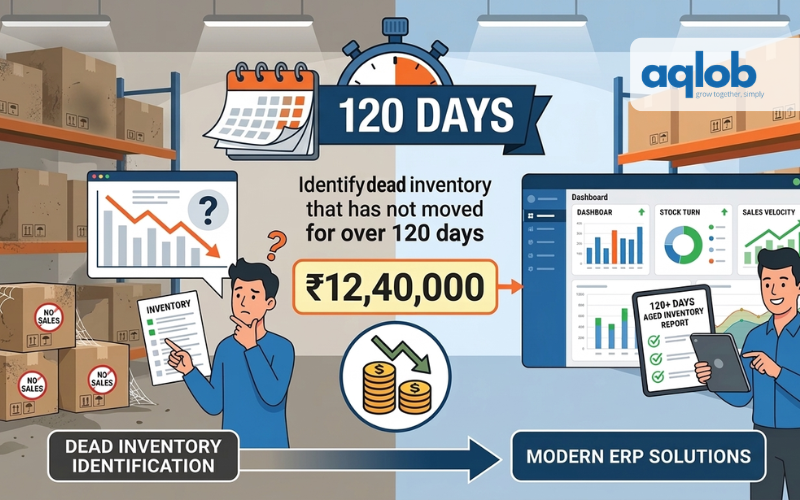
Dead inventory is one of the most common yet overlooked problems in factories, wholesalers, and trading businesses. When products remain unsold for long periods, they quietly lock up working capital and occupy valuable warehouse space.
In some cases, businesses discover that ₹12,40,000 worth of inventory has not moved in 120 days, turning what once looked like an asset into dead inventory.
Without proper visibility, these problems often remain hidden until they start affecting cash flow and operational efficiency.
What Is Dead Inventory?
Dead inventory refers to stock that has remained unsold for a long time and is unlikely to sell through normal demand. These items may still be stored in the warehouse, but financially they represent capital that is no longer productive.
According to supply chain resources such as
Investopedia, dead inventory often occurs due to overproduction, poor demand forecasting, or declining product demand.
Businesses typically classify inventory as slow-moving or dead if there has been no sales or usage activity for 90, 120, or 180 days, depending on the industry.
Why Dead Inventory Happens
Dead inventory usually does not occur suddenly. It develops gradually due to a combination of operational and decision-making issues.
Some common causes include:
- Over-purchasing raw materials
- Poor demand forecasting
- Lack of visibility into inventory movement
- Discontinued or obsolete products
- Purchasing decisions based on guesswork
Many growing businesses initially manage inventory through spreadsheets or basic accounting systems. As operations expand, this approach often leads to limited visibility and delayed decision-making.
If you’re interested in improving operational clarity as your business grows, you may also find this guide helpful:
https://blog.aqlob.com/how-growing-businesses-can-get-their-clarity-back-a-practical-step-by-step-guide/
The Hidden Cost of Dead Inventory
Dead inventory is not just a storage issue. It creates several hidden financial and operational costs.
1. Blocked Working Capital
Money invested in dead inventory cannot be used for purchasing fast-moving products or expanding operations.
Supply chain studies referenced by organizations like
Gartner suggest that many businesses carry excess inventory levels that significantly impact working capital efficiency.
2. Warehouse Space Consumption
Slow-moving items occupy valuable storage space that could be used for products that generate revenue.
Over time, warehouses become crowded with items that contribute little to business performance.
3. Increased Risk of Obsolescence
Products that remain unsold for long periods may become outdated, damaged, or completely unsellable.
Industries such as electronics, machinery components, and seasonal products are especially vulnerable.
4. Reduced Cash Flow
When inventory stops moving, cash flow slows down. This restricts the company’s ability to respond quickly to market demand or invest in new opportunities.
Example of Dead Inventory Insight
Imagine discovering this insight in your inventory system:
₹12,40,000 worth of inventory has not moved in 120 days.
This single insight immediately highlights a potential problem.
Recommended Actions
Businesses can respond to dead inventory in several ways:
- Stop purchasing those items
- Run clearance sales
- Bundle slow-moving items with fast-moving products
- Review demand before placing new orders
- Adjust production or procurement plans
Identifying these problems early can significantly improve working capital efficiency.
How to Identify Dead Inventory Early
Detecting dead inventory early requires visibility into inventory movement and aging.
Businesses should regularly monitor:
- Inventory aging reports
- Item movement frequency
- Sales velocity
- Stock turnover ratios
If you want to understand common inventory mistakes that lead to such problems, you may find this article useful:
These insights help businesses understand not only what is in stock, but also how inventory behaves over time.
Why Traditional Systems Often Miss Dead Inventory
Many traditional accounting systems generate large tables of reports but do not clearly highlight what requires attention.
Managers must manually analyze data to detect issues, which often means:
- Slow-moving inventory remains unnoticed
- purchasing decisions continue without accurate insights
- working capital gradually gets locked in the warehouse
Modern business systems aim to change this by converting raw operational data into clear, actionable insights.
Turning Business Data Into Decisions
Instead of forcing managers to analyze hundreds of rows of reports, modern ERP platforms focus on converting operational data into insights such as:
- Which items are becoming dead inventory
- Which products generate the highest profit
- Which customers contribute most revenue
- Which items are about to go out of stock
Platforms like Aqlob help factories and businesses turn everyday operational data into simple, visual, and actionable insights that support better decision-making.
Final Thoughts
Dead inventory is not just a warehouse problem. It is a business visibility problem.
Without proper insights, companies may continue purchasing or producing items that are already sitting idle in the warehouse.
Sometimes a simple insight like:
“₹12,40,000 worth of inventory has not moved in 120 days.”
can reveal a hidden issue and help a business take corrective action before the problem grows larger.
Understanding inventory movement, monitoring aging reports, and using better operational insights can significantly improve both cash flow and decision-making.
Learn More
If you want to explore how modern ERP systems help businesses detect problems like dead inventory and improve operational clarity, you can learn more here: