Every business starts with clarity. The founder knows every customer, every purchase, every expense.
But as soon as the business grows—even slightly—things begin to slip.
And this is where most businesses get stuck.
The Hidden Problems That Start When a Business Grows
Growth doesn’t create problems.
It reveals what has been unmanaged.
Here are the five most common issues we see in 90% of growing businesses:
1. No Single Source of Truth
Excel sheets, WhatsApp messages, verbal instructions, scattered files.
Everyone has information, but no one has the same information.
Result?
Confusion → mistakes → losses → arguments.
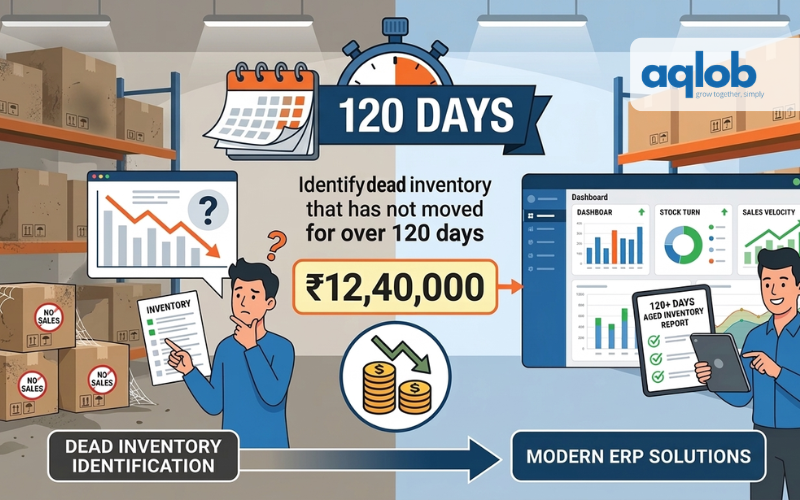
2. Inventory Becomes Guesswork
Most business owners don’t know:
- What’s in stock
- What’s moving fast
- What’s stuck for months
- What they purchased vs what was actually received
When this happens, decisions become emotional instead of data-driven.
3. Finance and Operations Don’t Talk to Each Other
Purchase team buys based on need.
Sales team promises based on hope.
Accounts records based on documents that come late.
Ultimately, the business owner becomes the “bridge” between all departments — and burns out.
4. Team Accountability Drops
When processes rely on people instead of systems:
- Data is incomplete
- Work depends on memory
- Responsibility becomes vague
And the owner has to follow up 10 times for simple tasks.
5. Business Stops Scaling
A business can grow on trust, relationships, and hard work…
…but it cannot scale without:
- Transparency
- Repeatable processes
- Real-time data
This is exactly where most companies plateau.
How Businesses Can Regain Control When Things Become Messy
As a business grows, complexity grows with it.
But the solution doesn’t require big changes — just a clearer way of working.
1. Create Clarity in How Work Flows
Most problems start because everyone works differently.
When tasks and responsibilities are clearly defined, mistakes naturally drop.
2. Make Important Information Visible
Stock, orders, expenses, production status — when these are visible in one place, the entire team works with confidence.
3. Standardise the Way Work Is Done
Small, consistent steps create big improvements:
same format for entries, same approval steps, same follow-up method.
These simple practices reduce daily friction and prepare the business for smoother growth.
4. What You Should Do Next
If you’re running a growing business, start with these steps:
- Identify your biggest friction point today
(inventory confusion, production delays, costing issues, follow-up overload) - Write down the current workflow
(how information moves) - Mark where it gets stuck or lost
(these are your “points of failure”) - Plan a standard process
(simple, repeatable, trackable) - Only then think of using software to automate it
This approach gives confidence, clarity, and control — without overwhelming your team.